Drone Inspection Services in Guyana
Detailed asset condition data, without scaffolding, rope access or shutdown.
Inspecting a flare stack, transmission tower, bridge or storage tank has traditionally meant putting people at height.
Scaffolding, rope access, confined-space entry - and often taking the asset out of service while it happens.
Drone inspection removes both costs. We capture high-resolution visual and thermal imagery of assets from the air, at close range, while the asset stays in operation and the inspection team stays on the ground.
Inspections are conducted under Guyana Civil Aviation Authority certification using certified platforms, and documented in structured condition reports your maintenance and integrity teams can act on.
Safety and compliance
Drone inspection exists to remove people from hazardous positions, so our own operations are run to the same standard.
Every inspection is flown under GCAA certification by pilots holding current Remote Pilot Licences, under a documented flight plan and risk assessment for the site. Operations are fully insured, and we work to the site's permit-to-work and HSE requirements as a matter of course.
Certification, insurance and method statements are available for tender submission and supplier prequalification. Tell us what your process requires.
Available for tender and prequalification:
- GCAA certification
- Remote Pilot Licences
- Documented flight plan
- Site risk assessment
- Insurance certificates
- Method statements
Assets we inspect
Energy and industrial
Flare stacks and vents, pressure vessels and storage tanks, pipelines and rights of way, process structures, loading facilities.
Power transmission and distribution
Transmission towers and conductors, substations and electrical assets, insulators and connections, vegetation encroachment along line routes.
Infrastructure
Bridges and crossings, culverts and drainage structures, roads and embankments, sea defences and koker structures.
Telecommunications and tall structures
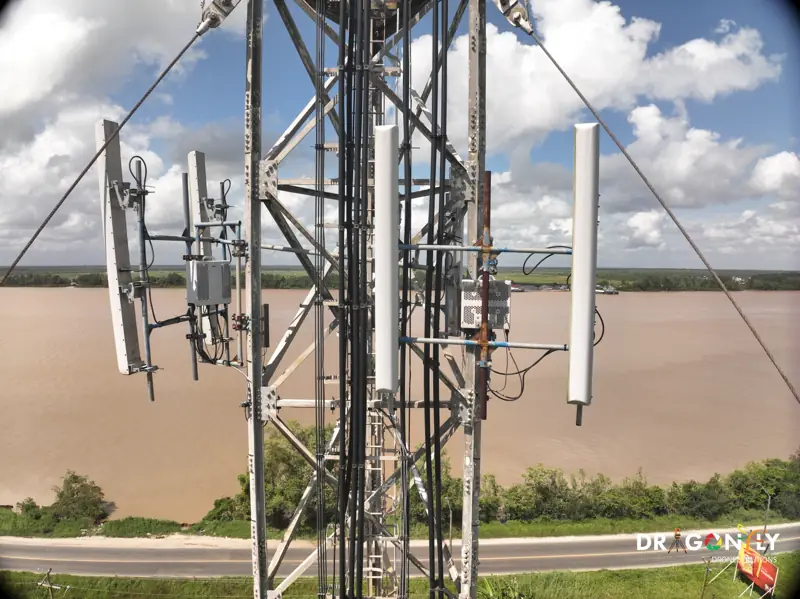
Masts and towers, antennas and mounting hardware, lightning protection, structural steelwork.
Buildings and facilities
Roofs and cladding, facades and high-level elements, solar arrays, industrial plant.
Visual and thermal
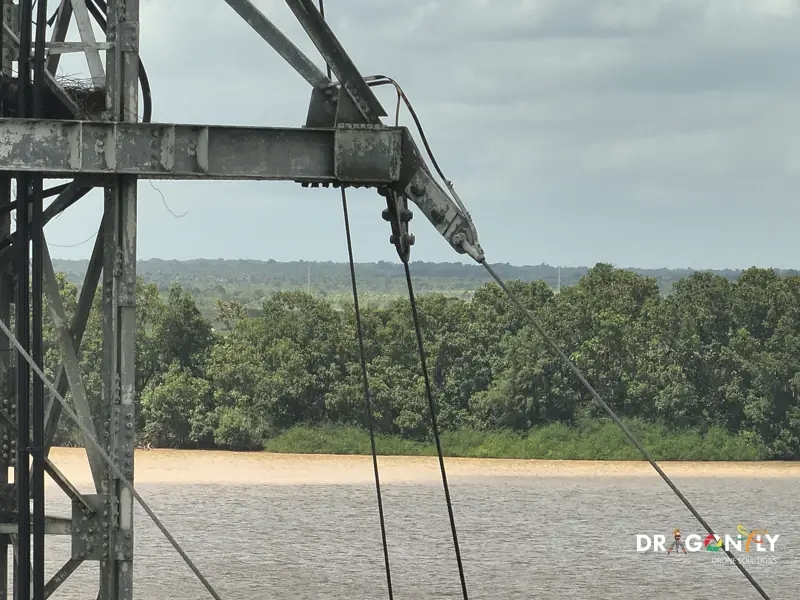
Visual inspection captures high-resolution imagery at close range, documenting corrosion, cracking, deformation, coating failure, missing components and physical damage - each image georeferenced so the defect can be located again.
Thermal inspection records surface temperature rather than appearance. On electrical assets it finds hot connections, overloaded components and failing insulators before they fail outright. On buildings and tanks it reveals moisture ingress, insulation failure and fill levels that are invisible to the eye.
Most inspections use both. The visual data shows what the asset looks like; the thermal data shows what it is doing.
Visual
- Corrosion and cracking
- Deformation and coating failure
- Missing components
- Physical damage, georeferenced
Thermal
- Hot connections and overloaded components
- Failing insulators
- Moisture ingress and insulation failure
- Fill levels invisible to the eye
What you receive
High-resolution inspection imagery
Georeferenced images at the resolution needed to assess condition, indexed by asset and location.
Thermal inspection data
Radiometric thermal imagery for electrical and mechanical assets, with temperature readings at points of interest.
Annotated condition reports
Structured reporting with findings marked up on the imagery, located on the asset, and described in terms your maintenance team can act on.
3D models, where useful
Measurable models of complex structures for planning access, repairs or modifications.
Comparison datasets
Repeat inspections flown to the same plan, so change over time can be assessed directly.
Why it costs less than it looks
The inspection itself is rarely the largest cost in a traditional programme.
Scaffolding, rope access teams, permits, and the production lost while the asset is down usually exceed it.
A drone inspection typically removes the access cost entirely and the shutdown cost with it. The asset keeps running, the data is captured in hours rather than days, and the imagery is permanent - so the next inspection has something to compare against.
Frequently Asked
Integrity, maintenance and procurement teams usually ask these first.
Ask us directlyIn most cases, no. We inspect live assets routinely. Where a shutdown is required for safety reasons on a particular structure, we will say so at the scoping stage.
Close enough to assess condition in detail. The exact standoff depends on the asset, the conditions and the safety assessment for the flight.
GCAA certification, Remote Pilot Licence details, insurance certificates, method statements, risk assessments and equipment specifications. Tell us what your procurement process requires.
Discuss an Inspection Programme
Tell us the assets, the location and what you need to assess. We will scope the inspection and the reporting around it.